


Kids Playroom Ideas for a Fun and Functional Space
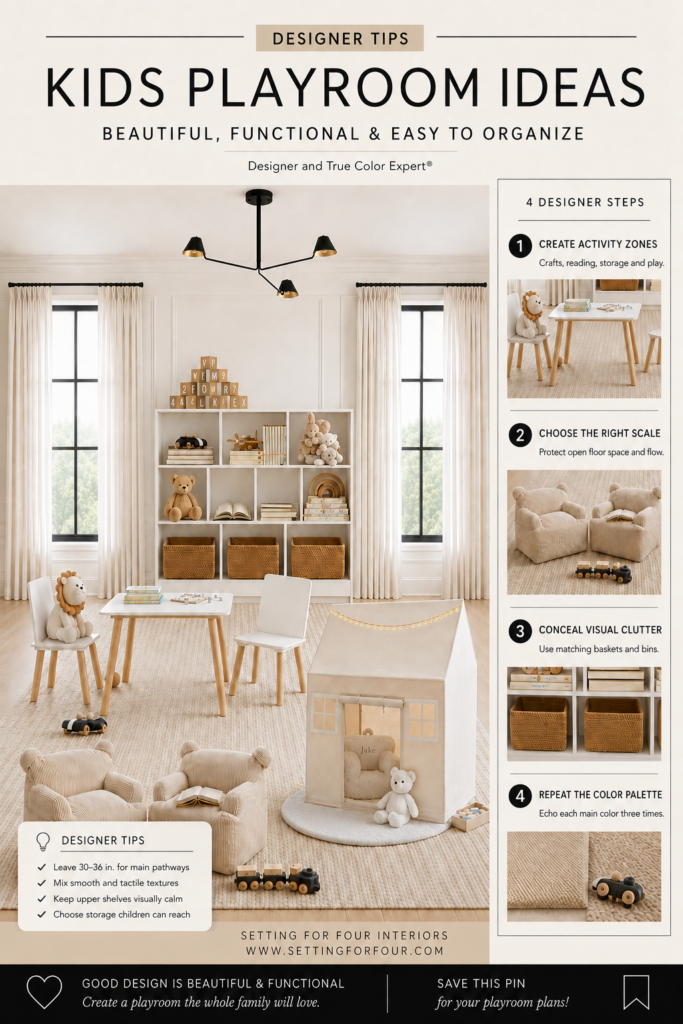
Kids playroom ideas should make a room feel fun and functional as well as organized and beautiful enough to complement the rest of your home!
Whether you are designing a dedicated playroom, a bonus room or a small play zone, the best kids playroom design supports how children actually play. It also makes toys easier to organize and gives the room a polished, cohesive look.
As a Designer and certified True Color Expert®, I design neutral kids playrooms to balance creativity, comfort, storage and timeless style. The soft color palette, light wood, woven textures and streamlined furniture create a calm foundation. Meanwhile, playful furniture and clearly defined activity zones make each room feel special for children.
In this guide, I’m sharing my expert design advice, measurement tips, color strategies and insider secrets for creating a kids playroom that looks elevated and works beautifully every day.
Save these designer-approved kids playroom ideas for inspiration when choosing your playroom layout, furniture, color palette and storage!
This post may contain affiliate links. If you purchase through these links, I may earn a small commission at no additional cost to you. Please read our disclosure policy.
Kids Playroom Design at a Glance
These kids playroom ideas will help you create a space that feels playful, organized and beautifully connected to the rest of your home.
For a stylish and functional playroom, include:
- A clear floor plan with open pathways
- Separate zones for active play, crafts, reading and quiet time
- Child-sized furniture that fits the room
- Open and closed playroom storage
- A soft, durable area rug
- Comfortable seating for children and adults
- A simple, cohesive playroom color palette
- Layered lighting for play, reading and crafts
- Room to adapt as children grow
Shop this stylish playroom here!
Need design help with a room update, room renovation or new build home?
Or help selecting furniture, with furniture layout, choosing paint colors or finishes like tile and countertops?
I’m a Designer and True Color Expert® – I can help!
See my Virtual Interior Design Services, client reviews and portfolio.
Contact me or email me at [email protected] for more information!
I’d love to work with you!

Kids Playroom Ideas Start With the Activities, Not the Furniture
The best kids playroom ideas combine open floor space, comfortable seating and practical storage that children can easily access.
Before shopping for kids playroom furniture, list the activities the room must support. This step prevents you from buying pieces that take up space and don’t solve a real need.
Ask yourself:
- Will the children draw, build or complete puzzles?
- Do they need open floor space for imaginative play?
- Would a play tent or play house create a cozy hideaway?
- Do they enjoy reading independently?
- Do they need a spot to nap occasionally?
- Which toys need to stay visible and which should be concealed?
- Will siblings of different ages use the playroom together?
- Does an adult need a comfortable place to sit?
Once the functions are clear, assign each activity a zone.
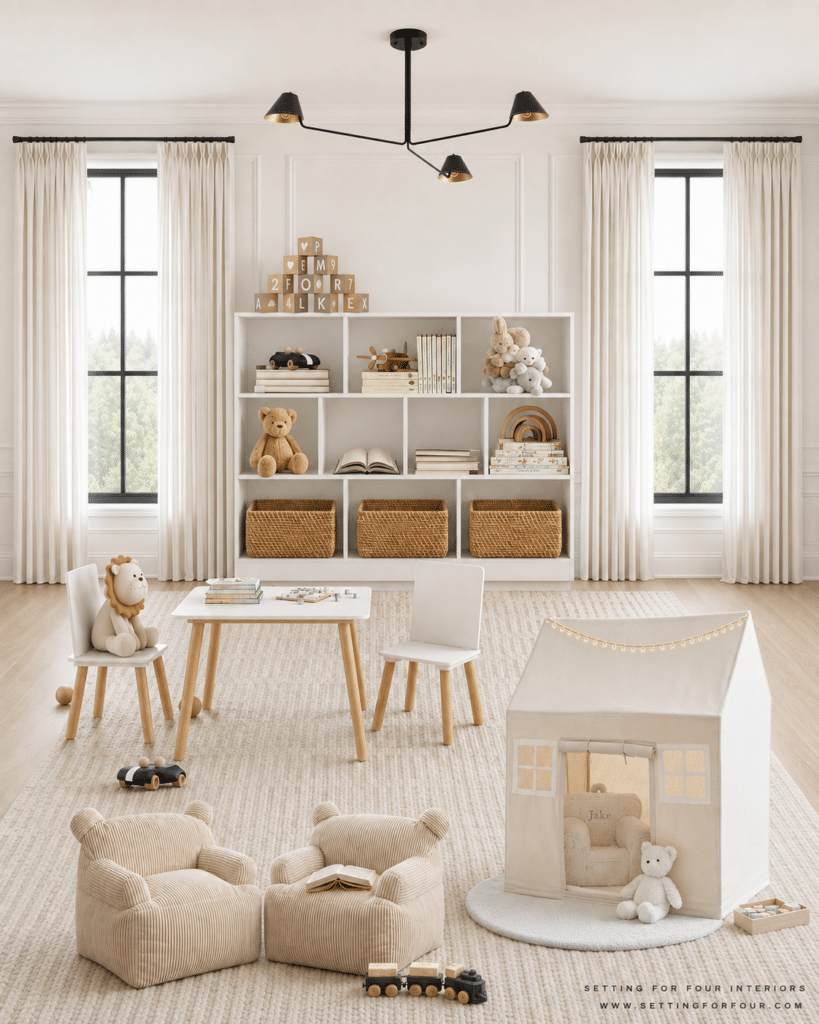
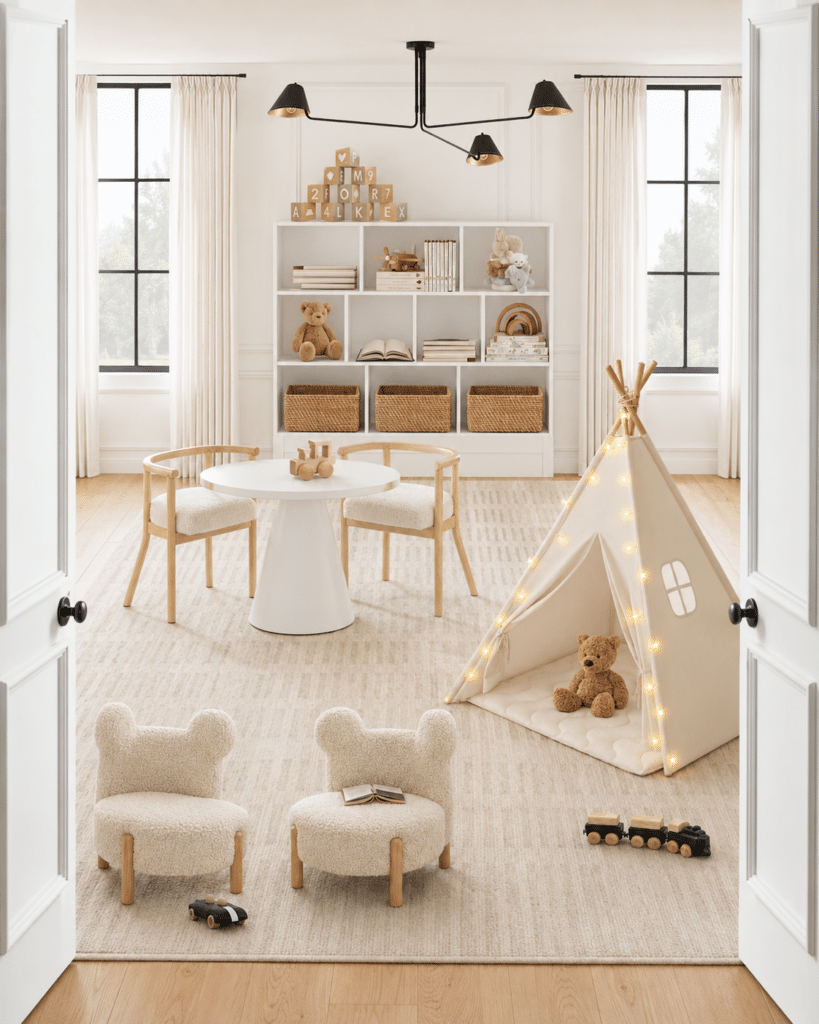
In my playroom designs, the activity table sits near the center, a cozy tent creates a quiet retreat, comfortable chairs form a reading nook and the cubby unit becomes the main storage wall.
This approach gives every item a purpose and keeps the kids playroom design from feeling random.
Shop this stylish playroom here!
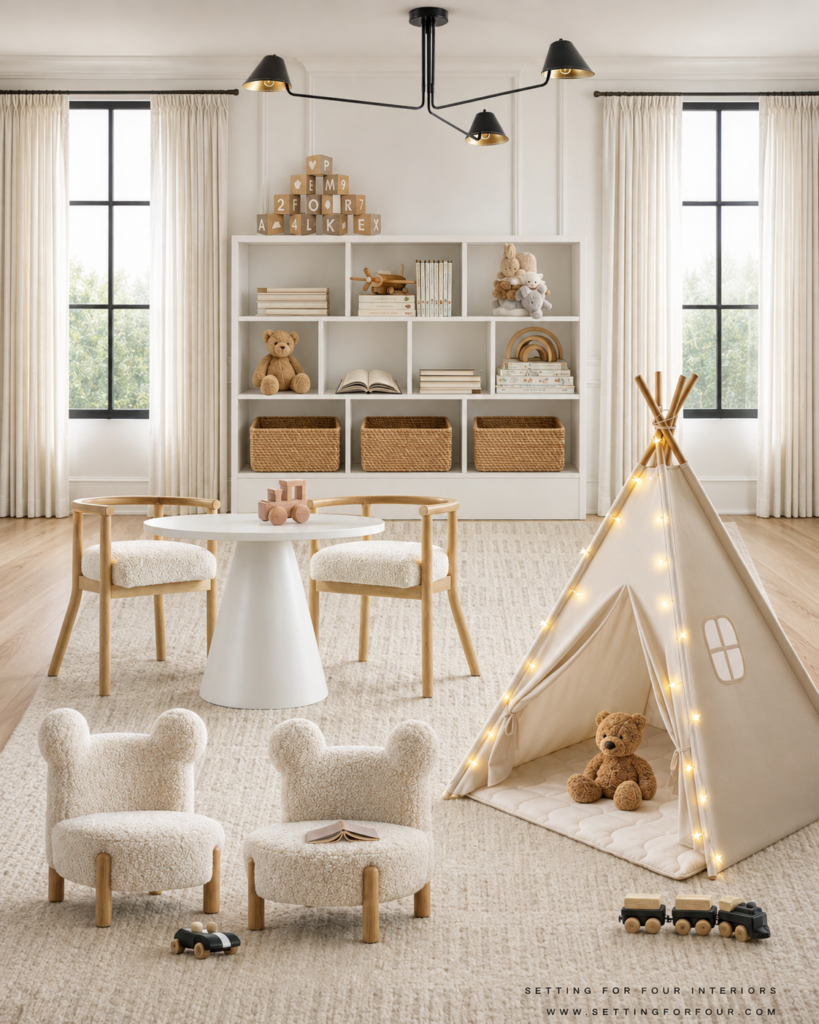
play table and play chairs | teddy bear chairs | brown teddy bear in tent
Create Playroom Zones That Make Sense
When planning kids playroom ideas, start by creating separate zones for crafts, reading, imaginative play and toy storage.
Zoning is one of the most important kids playroom ideas because it gives the room structure. It also helps children understand where activities belong and where items should be returned.
1. Creative Activity Zone
A child-sized table creates a dedicated surface for coloring, crafts, puzzles and building toys. Choose a simple table with rounded edges and chairs that children can move independently.
Keep frequently used supplies close by in a caddy, low drawer or labeled basket. However, avoid storing every art supply on top of the table. A mostly clear surface invites children to sit down and begin an activity.
2. Reading and Lounging Zone
Add soft lounge chairs, floor cushions or a small upholstered chair to create a welcoming playroom reading nook. In these designs, the low neutral chairs add comfort without visually overwhelming the room.
Place books within easy reach. Display a few favorite covers face-out and rotate them rather than crowding every surface.
3. Imaginative Play Zone
A play tent, teepee or house-shaped bed gives children a defined place for make-believe play and quiet time. It also creates a strong focal point.
To keep the room sophisticated, repeat the play tent’s color elsewhere. For example, the ivory canvas is repeated in the rug, curtains, chairs and bookcase. This color repetition makes the playful feature feel integrated into the overall design.
4. Toy Storage Zone
Dedicate one wall to storage whenever possible. A low cubby unit is practical because children can reach their toys and participate in cleanup.
Use baskets for visually busy items, such as blocks, cars and craft supplies. Then reserve open shelves for books and a limited number of beautiful toys. This mix keeps the room useful without making it look chaotic.
For more toy storage solutions, see my Living Room Toy Storage Ideas for Stylish Homes.
Use these kids playroom ideas to design a functional bonus room, shared family space or dedicated play area your children will enjoy for years.
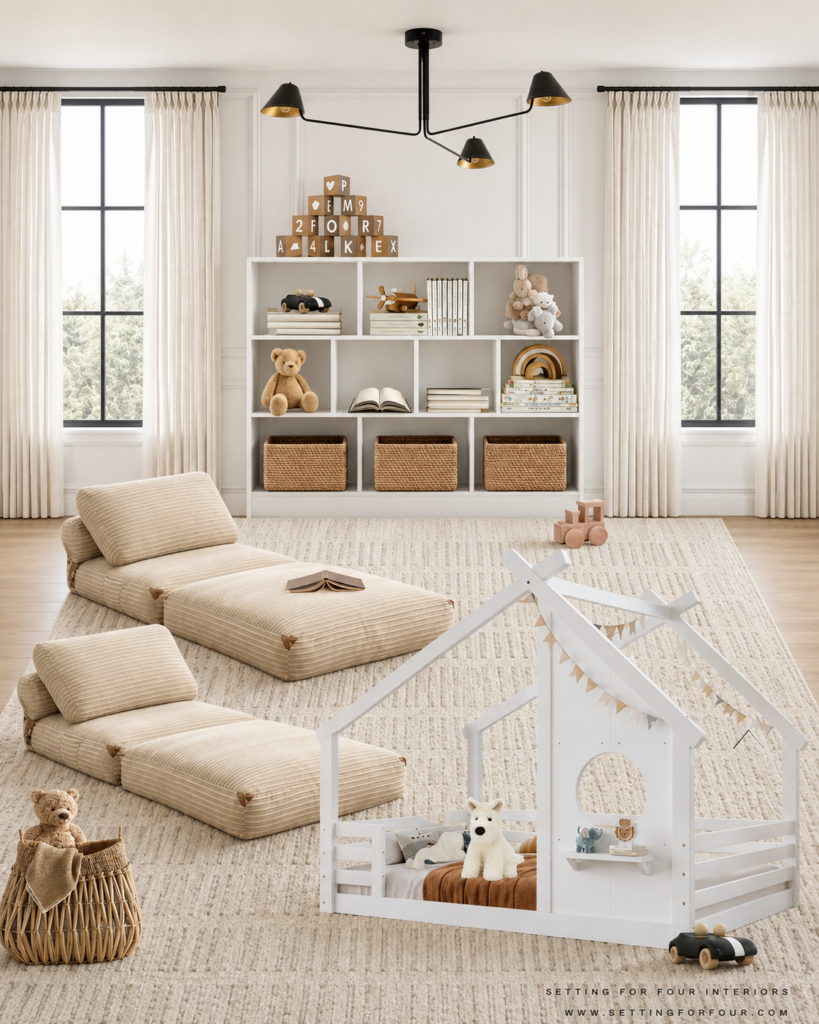
Choose Kids Playroom Furniture at the Right Scale
Scale can make or break a playroom layout. Furniture that is too large consumes valuable floor space, while pieces that are too small can feel scattered and temporary.
Choose one main piece for each function:
- One activity table for crafts and puzzles
- Two to four chairs, depending on the number of children
- One storage wall or cabinet
- One cozy feature, such as a tent or reading nook
- One large rug to visually connect the zones
Avoid filling every wall and corner. Children need negative space for movement, building and imaginative play.
Small-space kids playroom ideas should prioritize correctly scaled furniture, multipurpose storage and clear pathways through the room.
Measurement Tip
Measure the room before ordering anything and map each piece with painter’s tape on the floor.
Leave at least 30 inches for main walkways and aim for 36 inches in the busiest path when space allows.
For a kids activity table, allow roughly 24 inches behind each chair so a child can pull it out and sit comfortably.
Always measure the actual room—not only the builder’s plan—because baseboards, vents, doors and trim can affect usable space.
If your room is compact, these designer tricks to make a small room feel larger will help you protect open space and improve flow.
Use a Calm Kids Playroom Color Palette
These neutral kids playroom ideas prove that a children’s space can feel fun and inviting without relying on an overly bright color palette.
A children’s room does not need a rainbow of bright colors to feel playful. A neutral playroom can feel creative, warm and child-friendly when you layer tone, texture and shape.
The color palette in my playroom designs includes:
- Soft white like Behr Blank Canvas
- Warm ivory
- Pale beige – The Best Greige Paint Colors for a Timeless Home
- Natural light wood
- Woven tan
- Small black accents
- Muted brown and soft caramel accents
The black window frames and ceiling fixture add definition. Meanwhile, cream textiles, warm wood and woven baskets soften that contrast.
Color Tip #1: Check the Undertones
Whites can lean blue, violet, green, yellow or pink. In a room filled with cream upholstery, rattan and pale oak, a stark blue white may make those warmer finishes look dingy.
Instead, compare the white paint with the flooring, rug, curtains and furniture fabrics in the actual room. The right white should relate to those fixed finishes without turning noticeably yellow.
Color Tip #2: Repeat Each Main Color
Repeat every dominant color at least three times around the room. In these playroom designs, ivory appears in the rug, curtains, upholstery and tent. Natural wood appears in the table legs, toys, baskets and decorative accents. Black appears in the windows, light fixture and small toy details.
That repetition moves the eye around the room and makes the playroom color palette feel deliberate.
If choosing the right white feels overwhelming, my True Color Expert® White Paint Colors Guide takes away the guesswork. It includes my favorite Designer and True Color Expert® approved white paint colors, undertone details, coordinating trim colors and guidance for choosing whites for walls, trim and cabinetry.
You may also enjoy my guide to the 5 Best White Trim Paint Colors.
Layer Texture So a Neutral Playroom Never Feels Flat
Texture is essential in a neutral kids playroom. Without it, a beige and white color palette can feel unfinished.
These designs mix:
- Ribbed upholstery
- Nubby bouclé
- Woven rattan baskets
- Smooth painted wood
- Soft canvas
- Plush toys
- A low-pattern, textured rug
- Tailored linen-look curtains
The mix of smooth and tactile materials adds depth without adding visual clutter. It also gives children a warm, comfortable environment.
Keep the large surfaces simple. Smooth walls, a clean-lined bookcase and an uncomplicated rug allow the smaller textures to stand out.
One of my favorite kids playroom ideas is to combine open shelves for beautiful toys with matching baskets that conceal visual clutter.
For more ways to create a cohesive room, read How To Decorate A Room In 5 Simple Steps
and How to Make Your Home Look Cohesive and Pulled Together – The Right Way!
Plan Playroom Storage for Fast Cleanup
Beautiful playroom storage should make it easier to put toys away. If the system is too complicated, it will not survive real family life.
Use these playroom storage ideas:
- Large baskets for bulky toys
- Smaller labeled bins for blocks, cars and craft supplies
- Open book displays for current favorites
- Closed cabinets for visually busy items
- A portable caddy for crayons and markers
- Low shelves so children can help clean up
Group toys by how children use them, not only by size. For example, store building toys together even if they come in several shapes. Keep pretend-play accessories together so a child does not need to search the entire room.
For an attractive, practical storage option, consider this neutral bouclé storage ottoman, a woven basket with a lid or an eight-cube storage organizer. These pieces can hide toys while supporting the room’s neutral, organic-modern look.
Designer Tip: Use this photo label printer to label baskets with both a word and a simple picture for younger children. The room stays more organized because children can recognize where each category belongs.
Choose a Large, Durable Playroom Rug
A rug adds softness, warmth and acoustic comfort. It also visually connects separate play zones.
Select a low- to medium-pile rug that is comfortable for floor play but easy to vacuum. Look for a subtle pattern that helps disguise everyday wear. Avoid a rug that is so thick that small chairs wobble or toy vehicles cannot roll.
The rug should be large enough to support the main furniture grouping. At minimum, place the front legs of the lounge chairs on it. Ideally, the activity table and chairs should remain on the rug even when the chairs are pulled out.
Read How to Choose the Perfect Area Rug for more of my sizing and selection advice.
Add Layered Lighting
A kids playroom needs more than one source of light. Overhead lighting supports active play and cleanup. Natural light makes the room feel inviting. Task lighting may be necessary for reading or crafts.
Choose a ceiling fixture that provides good ambient light and adds a strong design moment. In these rooms, the black sculptural fixture balances the black window frames and gives the soft palette a modern edge.
Use window treatments to soften the architecture and control glare. Hang curtain rods high and wide to make the windows appear taller and allow the panels to sit mostly outside the glass when open.
My Secret Design Tip You Won’t Find Anywhere Else
Design the playroom around a “visual calm line.”
Choose one consistent height—usually the top of the low bookcase, toy cabinet or window sill—and keep most everyday toy storage at or below that line. Above it, display only a few sculptural toys, books, simple wall art or decorative objects with open space around them.
Why does this work? The lower half of a playroom naturally contains more activity, color and movement. Keeping the upper half visually quiet gives the eye a place to rest. As a result, the whole kids playroom looks calmer and more expensive, even when plenty of toys are in use.
In these playroom designs, the low white cubby unit anchors the storage. Baskets conceal the busiest toys below, while a curated group of books and natural wood toys creates breathing room above.
Insider Secrets for a More Luxurious Kids Playroom
Use Fewer, Larger Pieces
Several tiny storage units make a room look fragmented. One substantial bookcase, one generous rug and one strong focal feature create a more intentional playroom design.
Mix Straight and Curved Shapes
The straight lines of windows, shelving and tables can feel rigid. Rounded lounge chairs, soft toys and curved tent openings create contrast and make the room feel friendlier.
Leave Some Shelves Empty
You do not need to fill every cubby. A little negative space makes the objects you display look more important and gives the room a restrained, designer look.
Keep the Adult View in Mind
Stand at the doorway and note what you see first. Place the most attractive element—a styled storage wall, tent or seating area—on that sightline. Then tuck visually busy supplies farther from the entrance.
Rotate Instead of Accumulating
Store a portion of the toys elsewhere and rotate them periodically. Fewer available toys can encourage deeper play, and the playroom is easier to maintain.
Make the Kids Playroom Grow With Your Child
Children’s needs change quickly, so avoid building the entire room around one short phase.
Choose flexible pieces:
- A low bookcase that can later hold games or school supplies
- A simple table that can become a homework desk
- Neutral lounge chairs that work in a bedroom or bonus room
- Baskets that can store toys now and blankets later
- A durable rug that coordinates with several color palettes
Keep the room’s larger investments neutral. A neutral playroom is the most timeless and versatile.
Then use books, art and small accessories to reflect your child’s current interests. Those details are easier and less expensive to update.
Need Help Designing Your Playroom?
If you are unsure about the kids playroom layout, furniture scale, storage, paint color or how to make everything look cohesive, my Virtual Interior Design Services can give you a clear, customized plan.
As a Designer and certified True Color Expert®, I can help you select furniture, develop a functional layout and coordinate the color palette with your home’s flooring, lighting and existing finishes.
Virtual design is an affordable and convenient way to receive professional guidance without the cost of traditional full-service design. It can save you hours of searching and help you avoid expensive mistakes, such as ordering furniture that is the wrong size, choosing a rug that is too small or painting the room a white with the wrong undertone.
You receive expert direction so you can move forward with confidence and create a kids playroom your family will enjoy for years. Contact me for a free quote—I’d love to help!
Kids Playroom Ideas FAQ
What should every kids playroom include?
Every kids playroom should include open floor space, accessible toy storage, comfortable seating, a durable rug and age-appropriate surfaces for play. Add activity zones based on your child’s interests, such as a craft table, reading nook or imaginative-play area.
How do I make a playroom look stylish?
Use a limited color palette, repeat the main colors throughout the room and choose storage that coordinates with the furniture. Mix tactile materials such as upholstery, wood and woven baskets. Most importantly, leave some open space on the floor and shelves.
What is the best color for a kids playroom?
The best color depends on the room’s light, flooring and fixed finishes. Soft white, warm ivory, pale beige and muted natural colors create a flexible foundation. Add brighter color through books, art and toys. Always test paint in the room and check its undertones before committing.
See Top 50 Bestselling Paint Colors At Sherwin Williams for playroom paint color ideas!
How do I organize a small playroom?
Use vertical storage, low cubbies, labeled baskets and furniture that serves more than one purpose. Define only the most important activity zones and protect open floor space. Rotate toys instead of keeping everything visible at once.
What size rug works in a playroom?
Choose a rug large enough to connect the main furniture. The front legs of lounge chairs should sit on it, and an activity table’s chairs should remain on the rug when pulled out. Measure and tape the rug dimensions on the floor before ordering.
How can I create a neutral playroom that children still love?
Layer warm neutrals with playful forms, soft textures and accessible toys. Tents, bear-ear chairs, natural wood toys and colorful books add personality without overwhelming the calm palette.
How do I make a playroom safer?
Anchor bookcases and tall storage to wall studs, follow manufacturers’ age and weight guidelines and avoid long accessible cords. Choose stable furniture with rounded edges, keep small objects away from younger children and maintain clear paths to doors.
More Design and Decor Ideas
- Neutral Kids Bedroom Ideas: Stylish & Functional Design Tips
- Living Room Toy Storage Ideas for Stylish Homes
- 20 Beautiful Backpack Storage Ideas For A Clutter-Free Home
- Backyard Movie Theater Idea For Family Movie Nights With The Kids!
- 10 + Best Kids Books For Bonding And Learning
- How To Decorate A Room In 5 Simple Steps
- 10 Designer Tricks to Make a Small Space Feel Bigger
- How to Choose the Perfect Area Rug
- 5 Best White Trim Paint Colors
- Understand the Color Wheel and Color Schemes
- Easy Ways to Organize: Tips and Tricks
- Bestselling Repose Gray – Undertones & Coordinating Colors
- Interior Design Trends for Everyday Homes
- Elevated Amazon Home Decor Ideas: Designer Picks
- Paint Color Trends That You Need To Know!
With thoughtful planning, practical storage and a cohesive color palette, you can create a kids playroom that feels both fun and functional while still looking beautifully connected to the rest of your home.
Which playroom feature would your children love most: the creative table, cozy reading chairs or the play tent?